
TV Size Rules for Florida Media Walls: How Screen Size Affects Layout
Introduction
TV size is not a final detail. In Florida media walls, screen size defines layout, proportions, storage planning, and fireplace placement. Choosing the wrong TV size leads to awkward spacing, poor viewing comfort, and unbalanced built-in entertainment centers. This guide explains clear TV size rules used for Florida media walls.
Why TV Size Comes First
A media wall is built around the TV.
TV size affects:
• Wall proportions
• Cabinet width
• Fireplace size
• Viewing comfort
• Overall visual balance
Choosing a TV after the wall is designed creates conflicts.
TV Size Is Measured by Diagonal Length
TVs are measured diagonally, not by width or height.
Important reminder:
• Always use diagonal screen size
• Include bezel if required
• Confirm exact model dimensions
Small differences matter at scale.
How TV Size Affects Wall Width
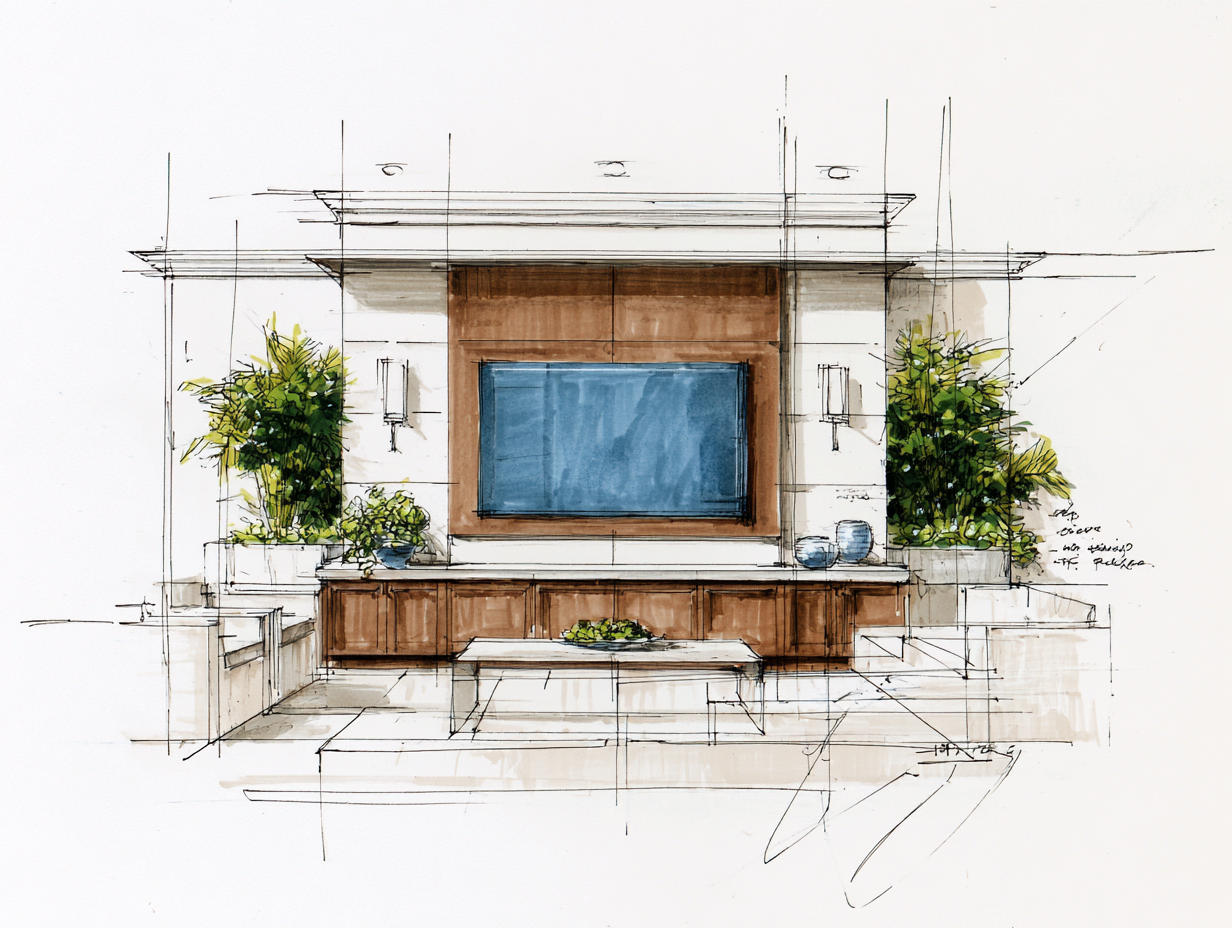
TV width drives the entire composition.
General rules:
• TV should not dominate the wall
• Side margins create balance
• Cabinets should frame, not squeeze
A narrow wall limits TV size options.
A wide wall allows stronger framing and storage.
TV Size and Cabinet Proportions
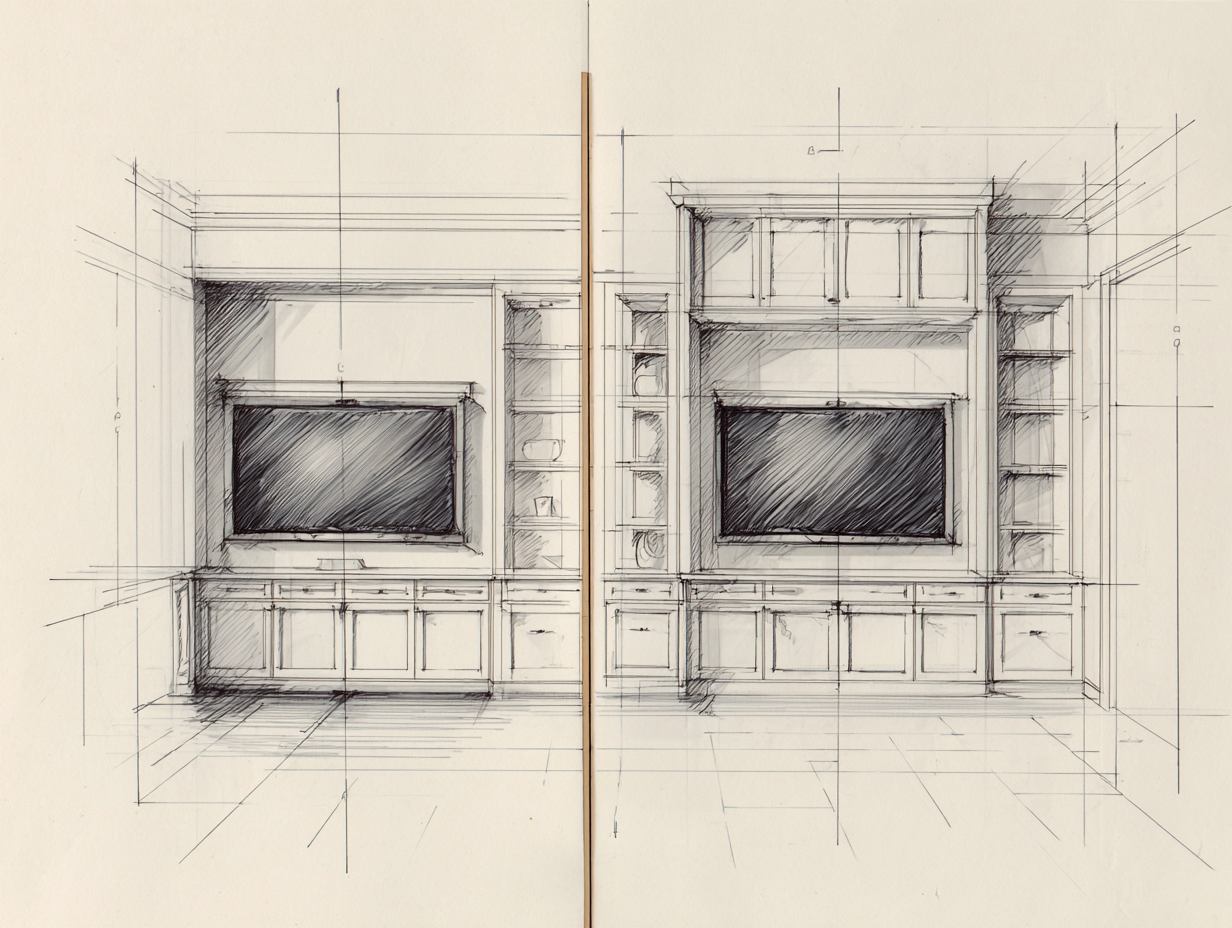
Cabinetry must support the screen visually.
Key guidelines:
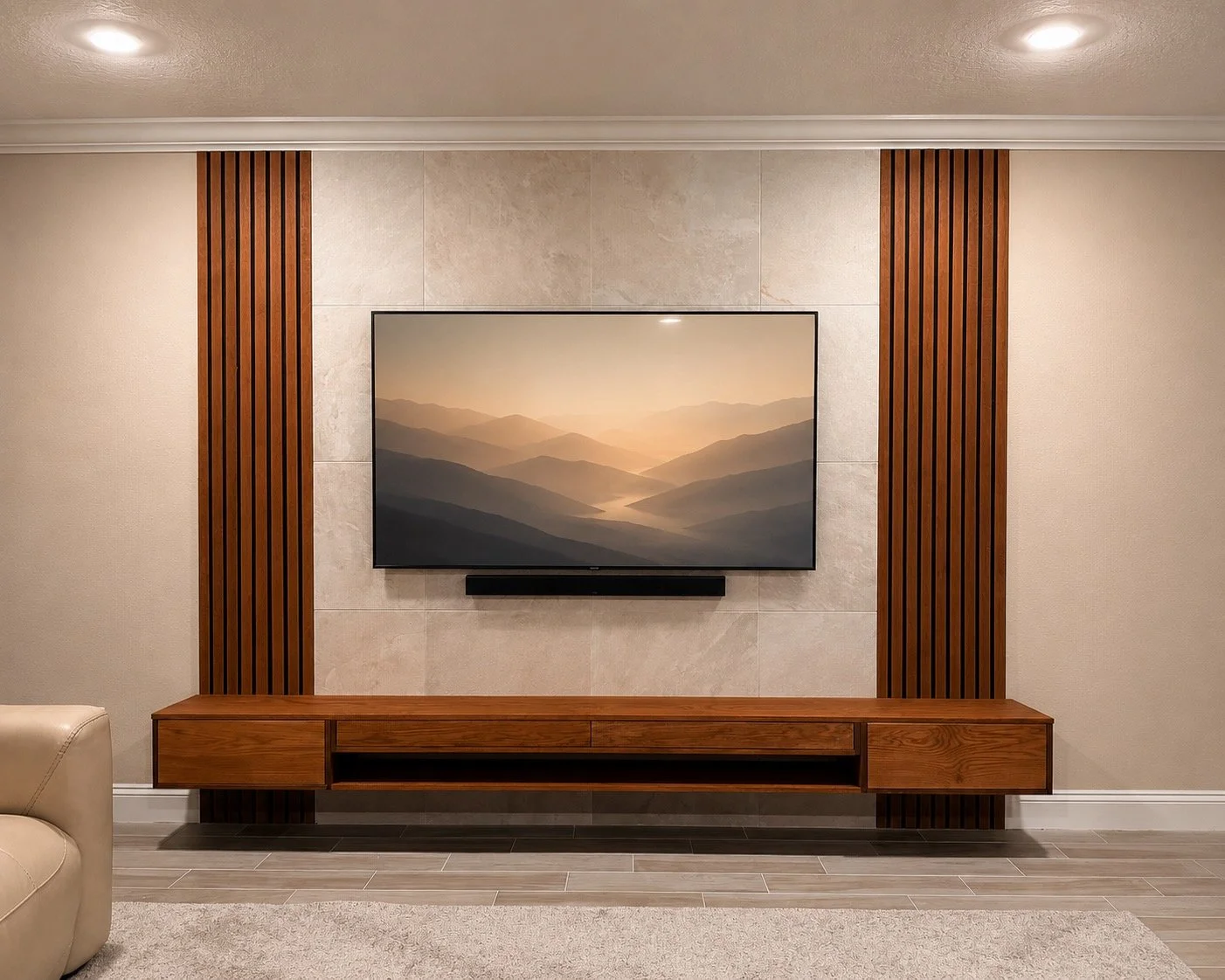
• Base cabinet width should exceed TV width
• Side cabinets balance large screens
• Floating cabinets require tighter proportions
Oversized TVs overpower shallow cabinetry.
TV Size and Viewing Distance
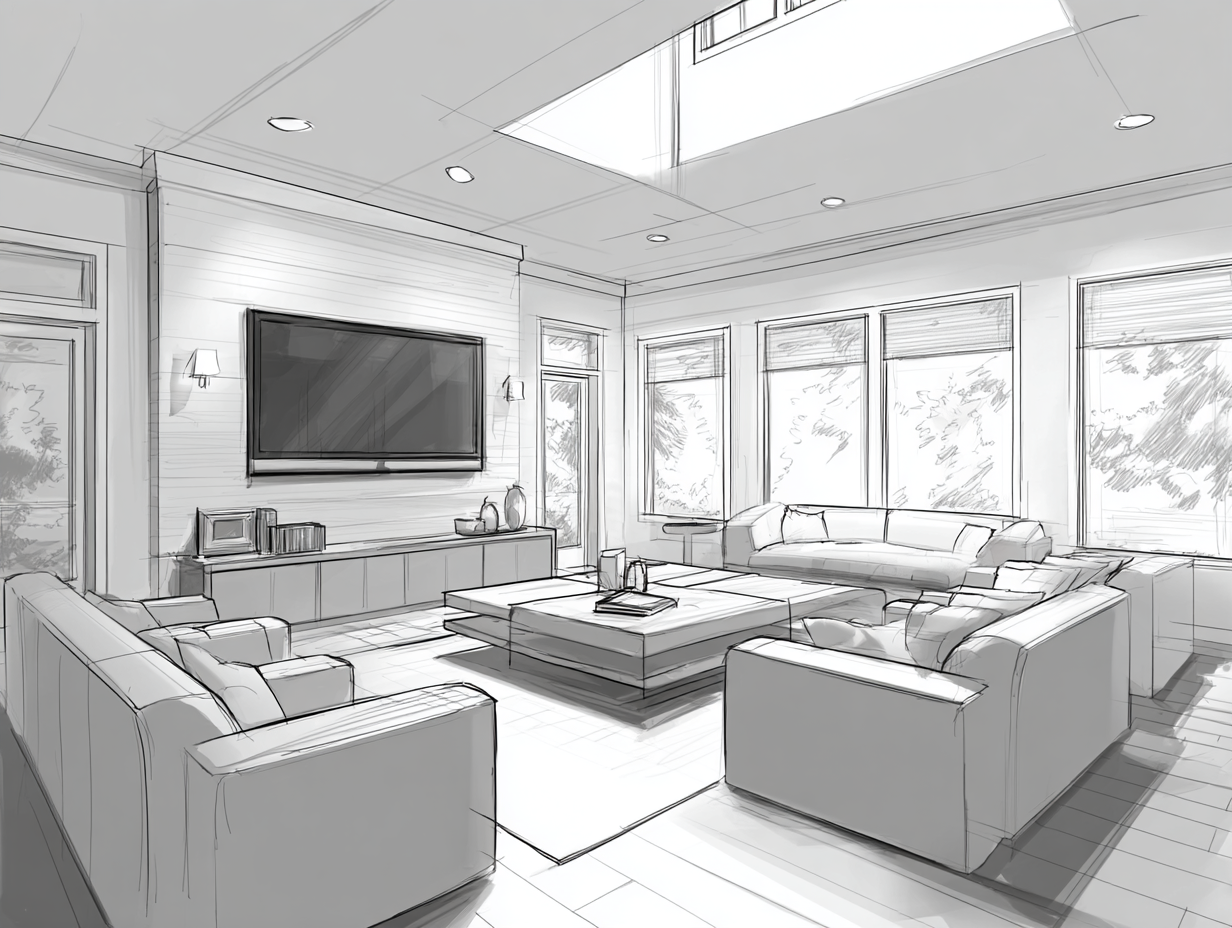
Comfort matters more than symmetry.
Basic viewing logic:
• Larger TVs require greater distance
• Eye level should align with TV center
• Seating position defines mounting height
Do not push the TV higher to “fit” a fireplace or shelves.
TV Size and Fireplace Integration
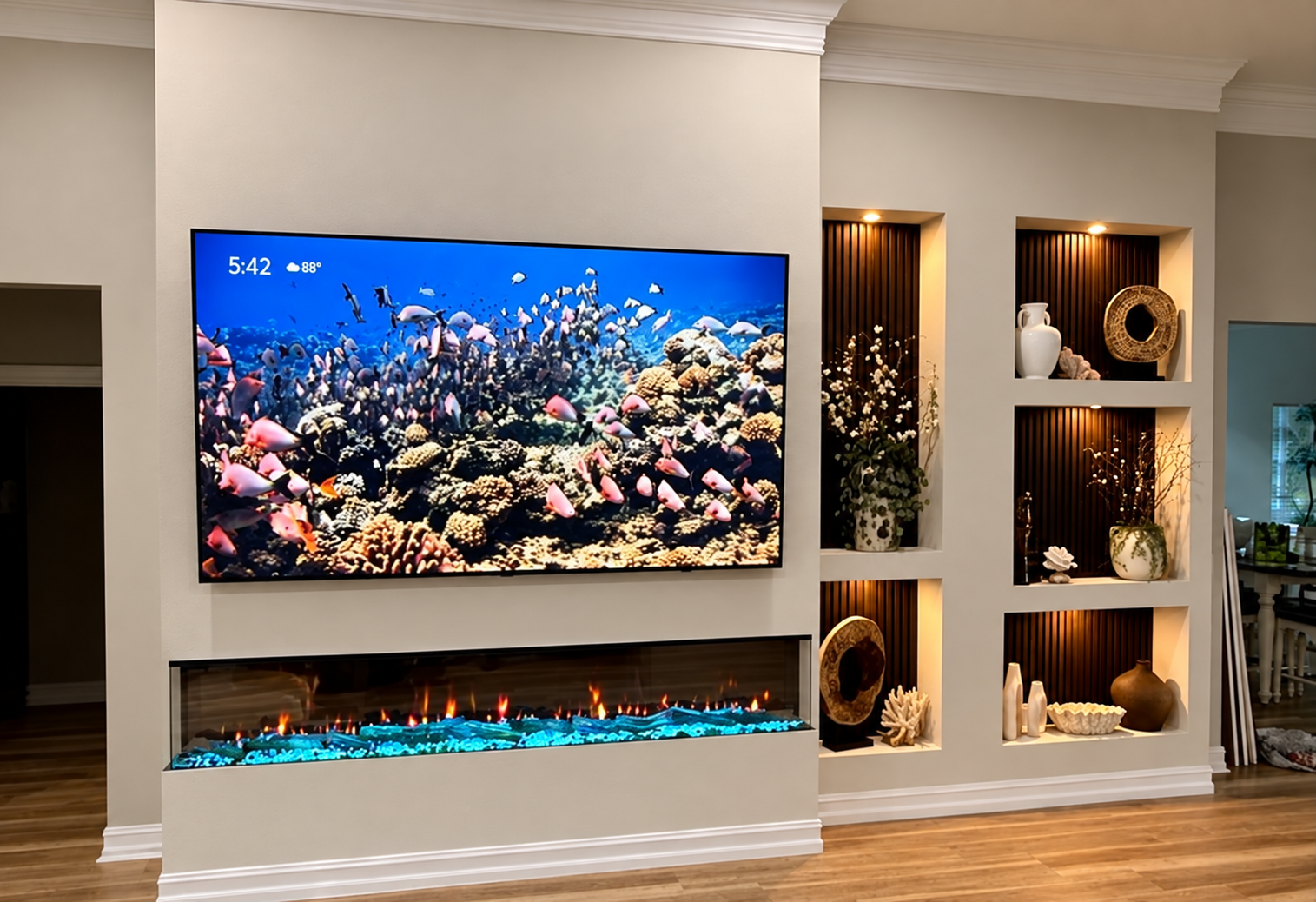
Fireplace size must follow TV size, not the opposite.
Rules to follow:
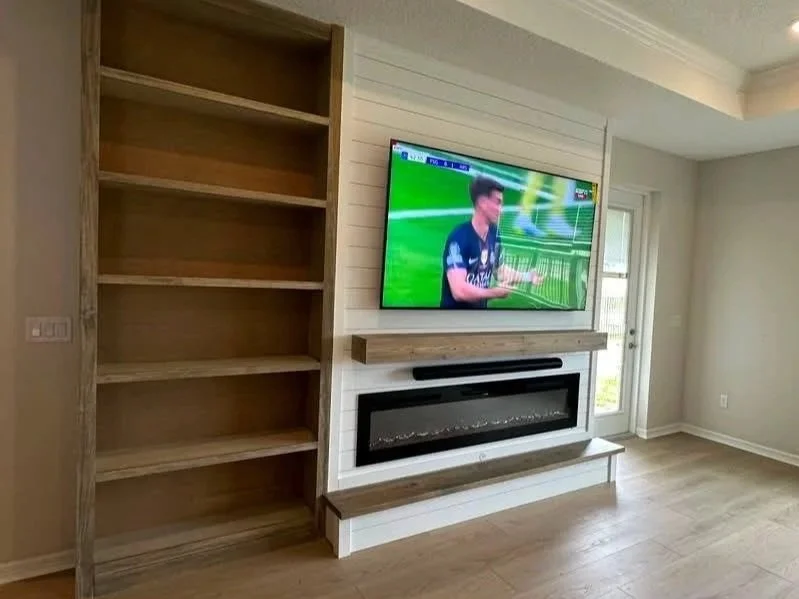
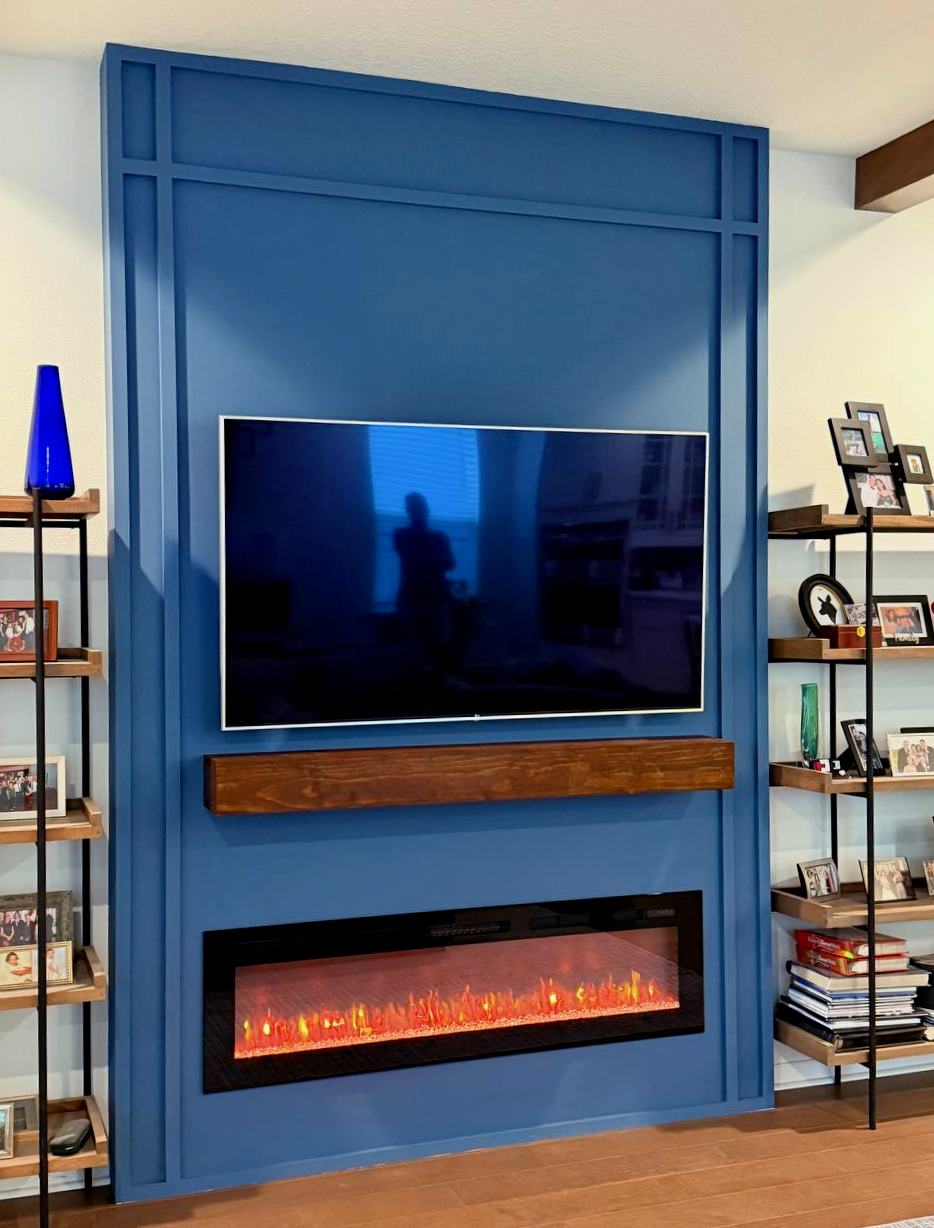
• Fireplace width often aligns with TV width
• Fireplace stays visually secondary
• TV remains primary focus in most Florida homes
Oversized fireplaces force TVs too high.
TV Size by Ceiling Height Category
8–9 ft ceilings
• Moderate TV sizes
• Horizontal layouts
• Limited vertical stacking
10–12 ft ceilings
• Larger TVs supported by framing
• Balanced TV and fireplace compositions
14–20 ft ceilings
• Large-format TVs
• Architectural framing required
• Multi-zone vertical layouts
Ceiling height controls how TV size is perceived.
TV Size and Storage Planning
TV size affects storage placement.
Consider:
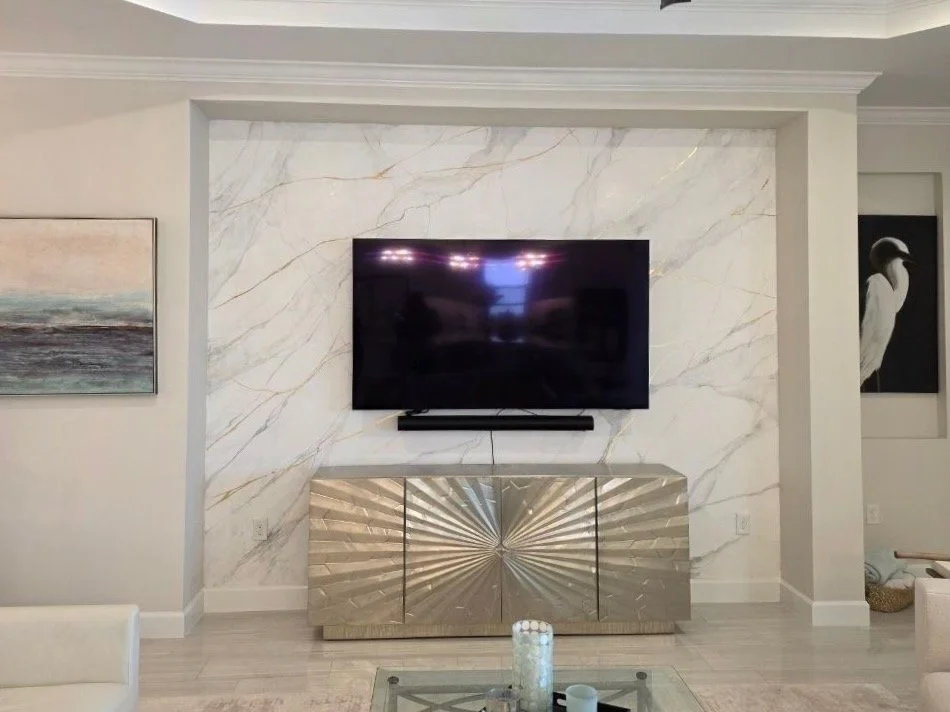
• Clearance for soundbars
• Cabinet height below TV
• Space for devices behind the screen
Larger TVs reduce available storage zones if not planned early.
Common TV Size Mistakes
• Choosing TV size last
• Oversizing TV for wall width
• Mounting TV too high
• Ignoring viewing distance
• Letting fireplace dictate TV position
These mistakes cause redesigns.
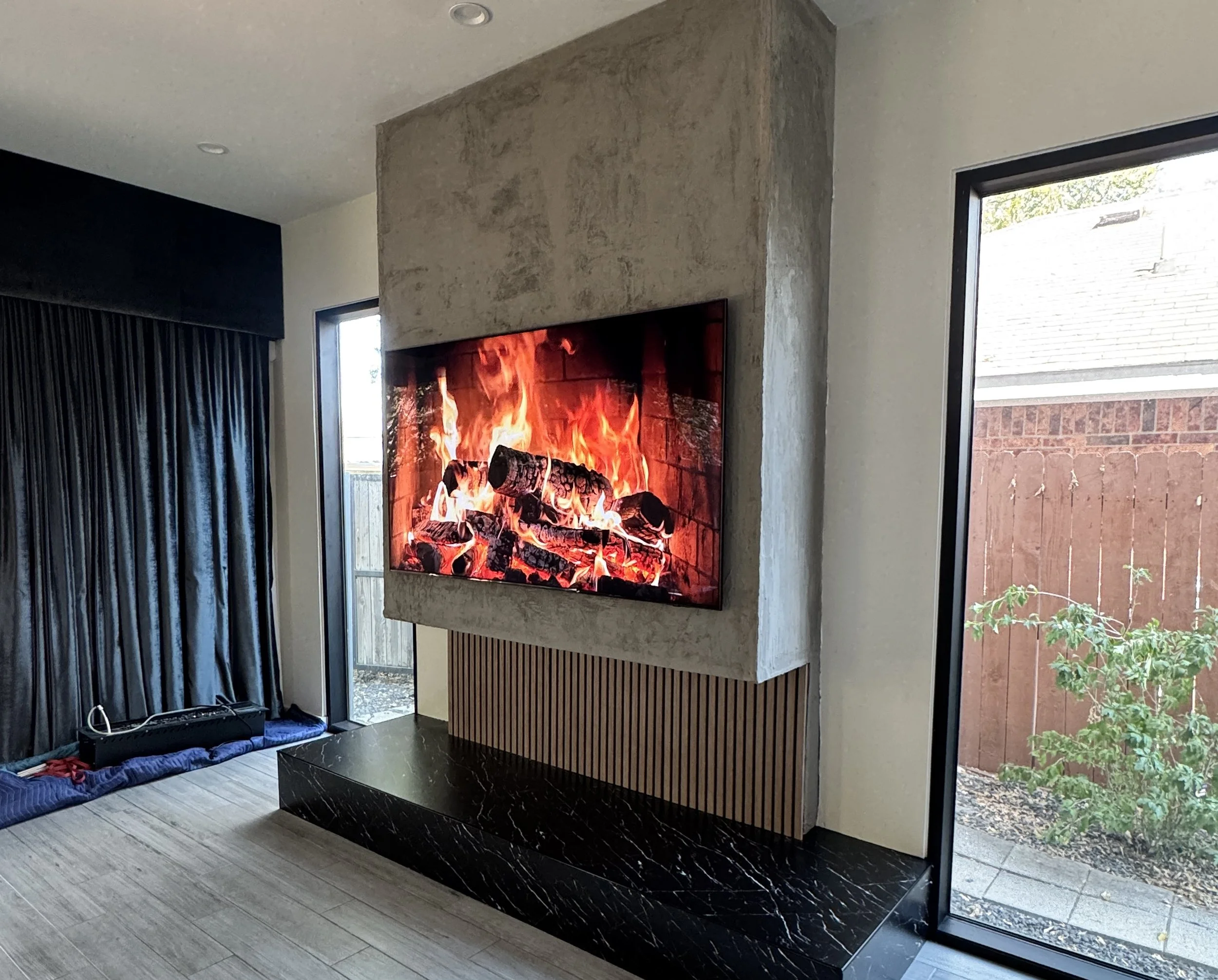
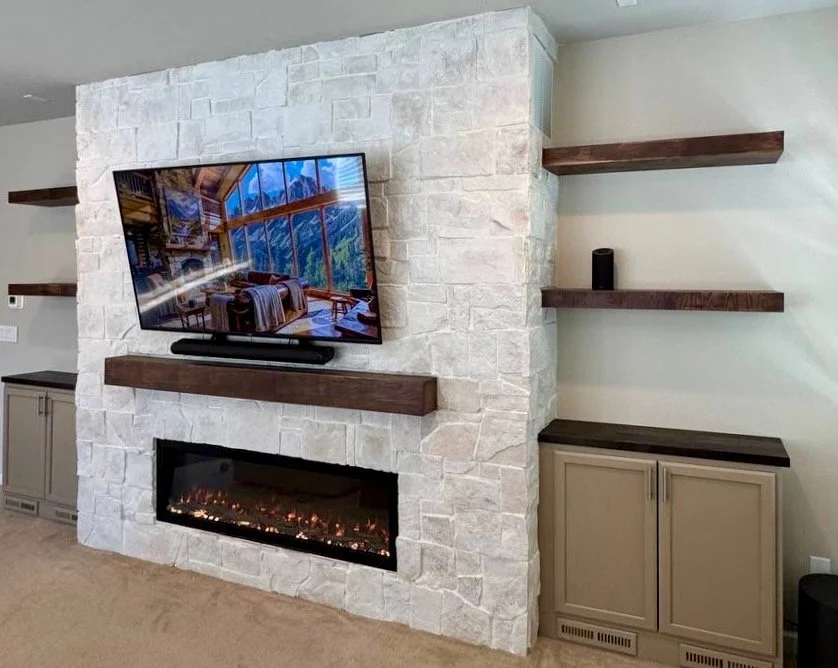
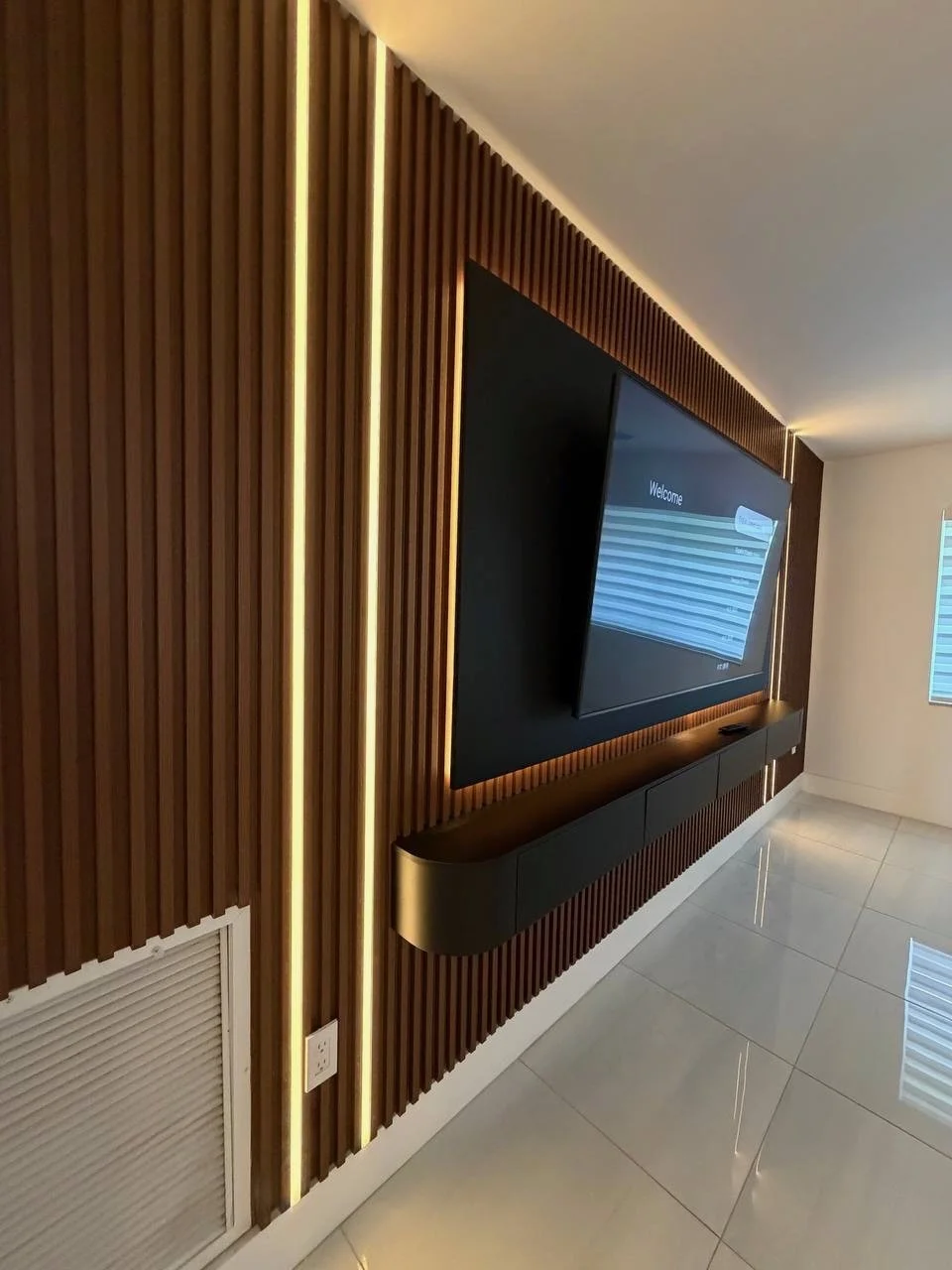
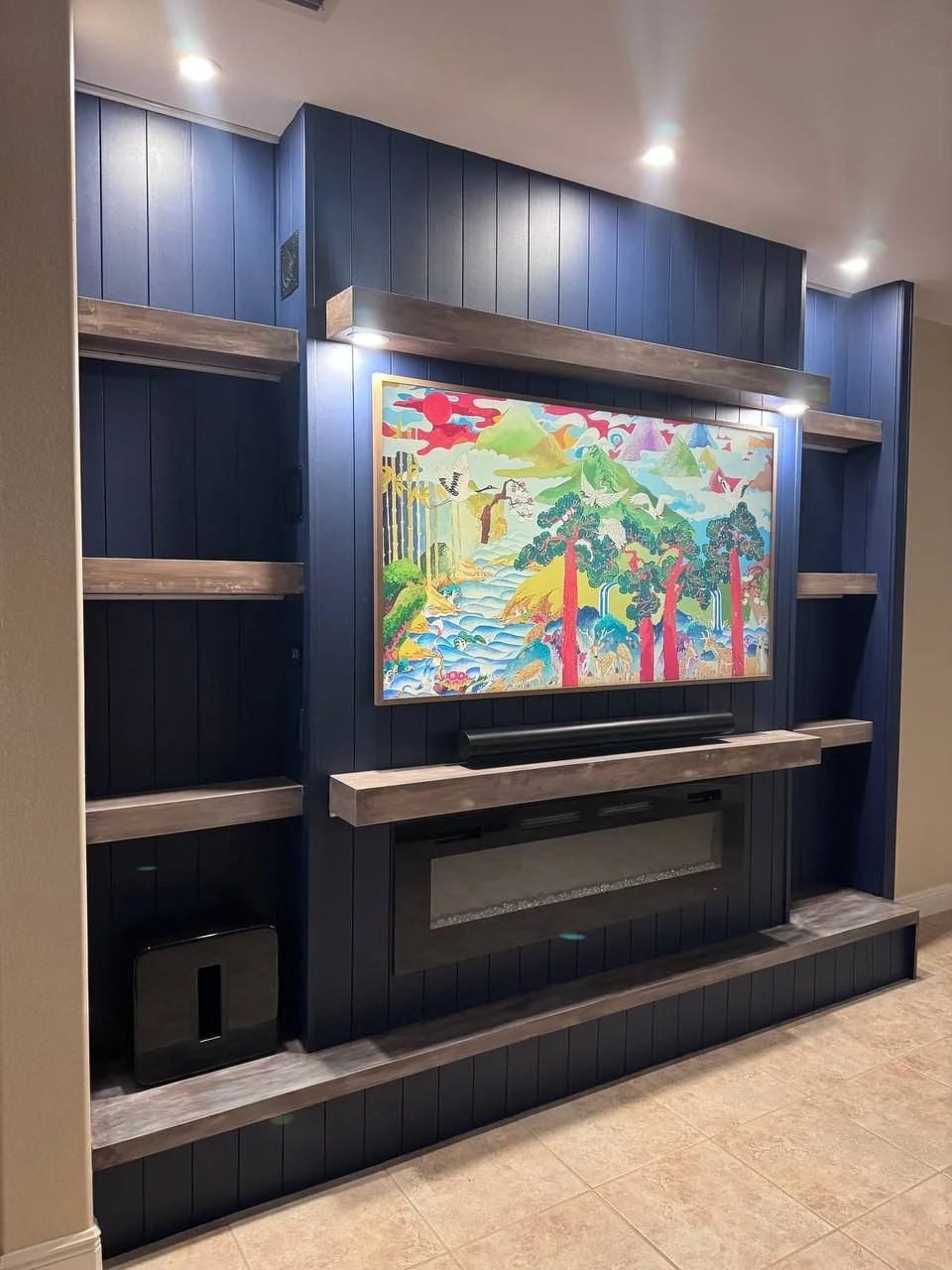
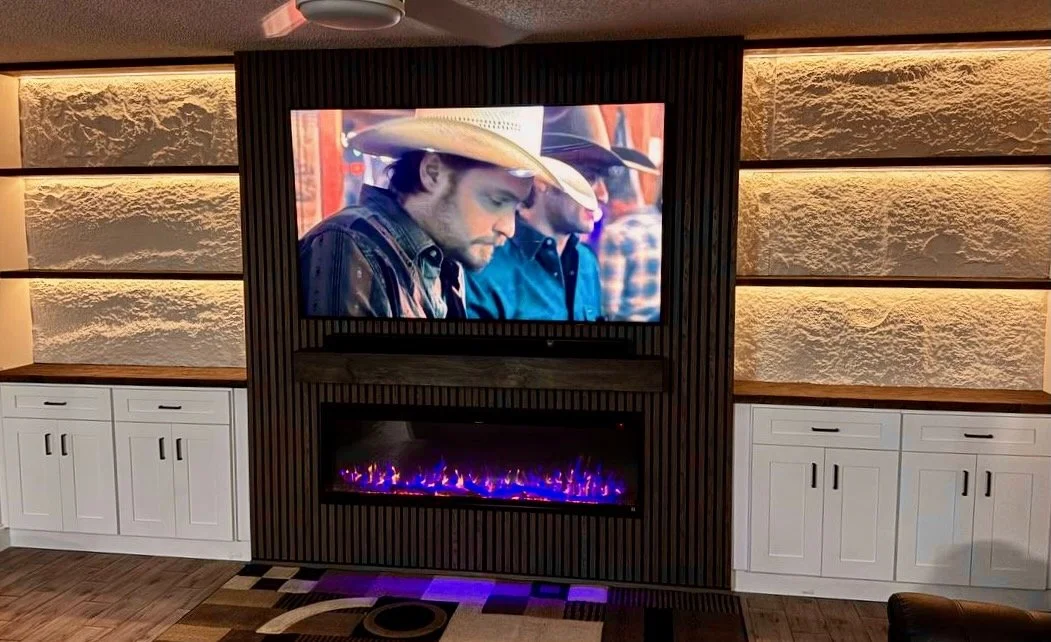
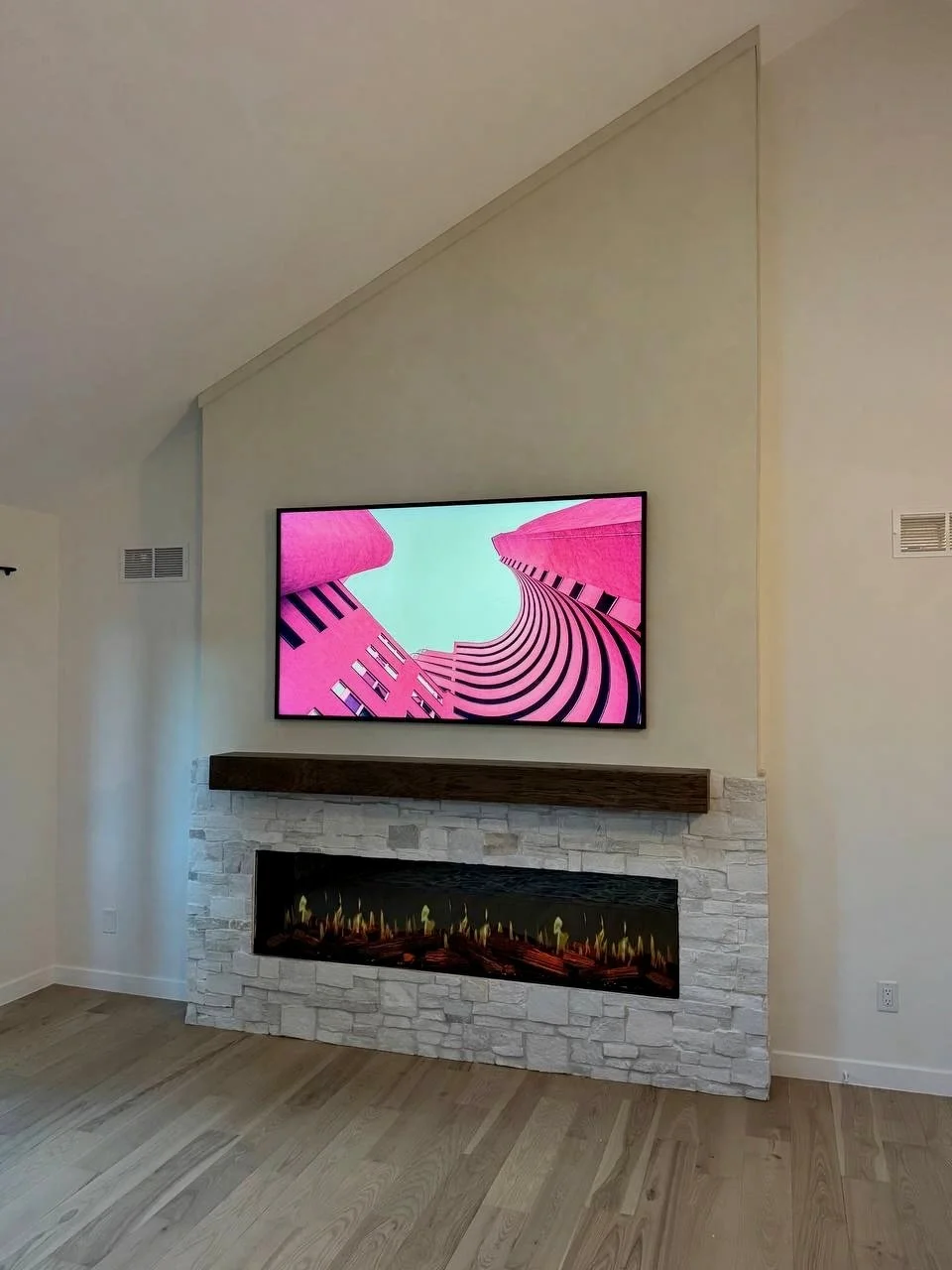
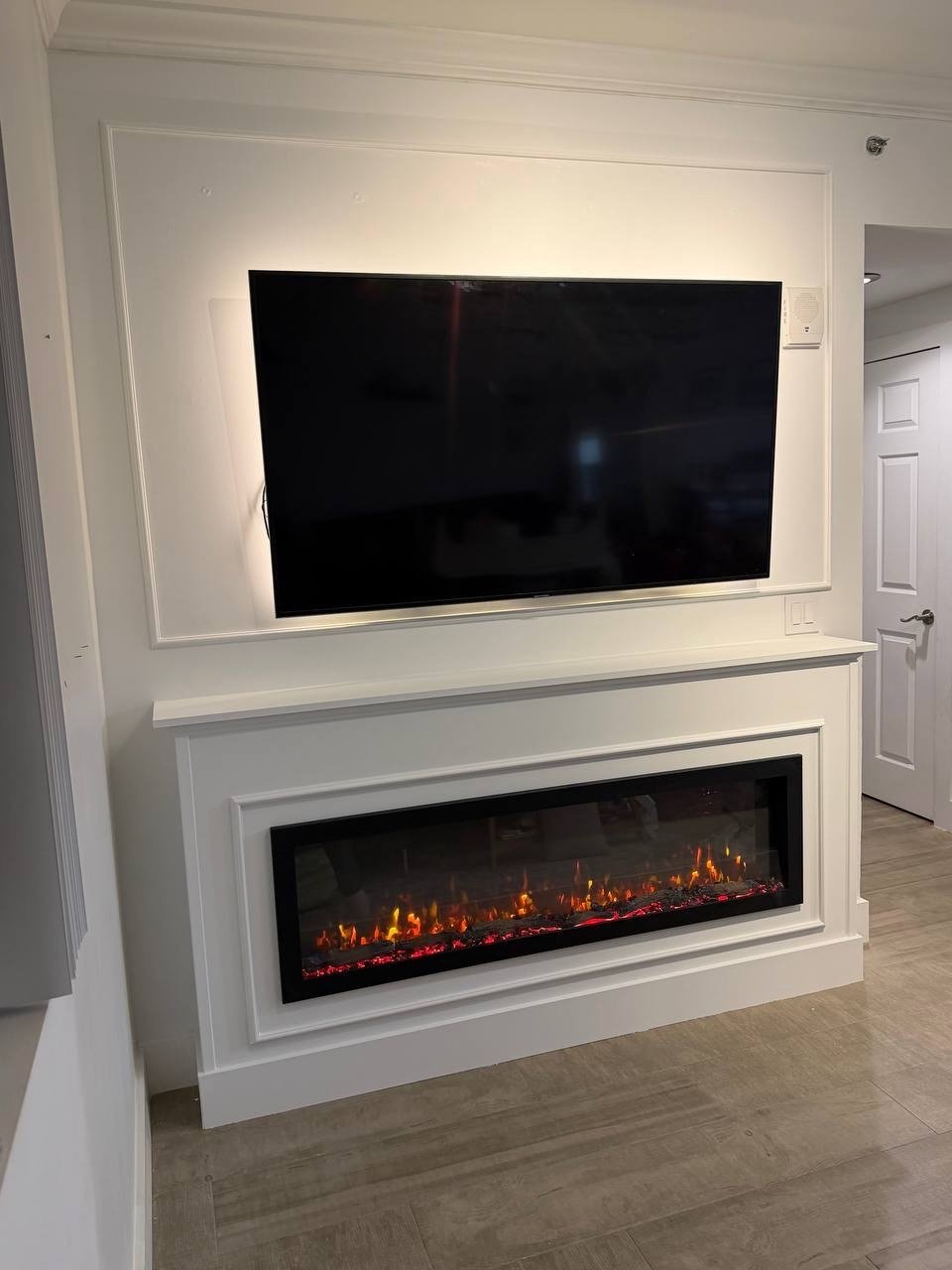
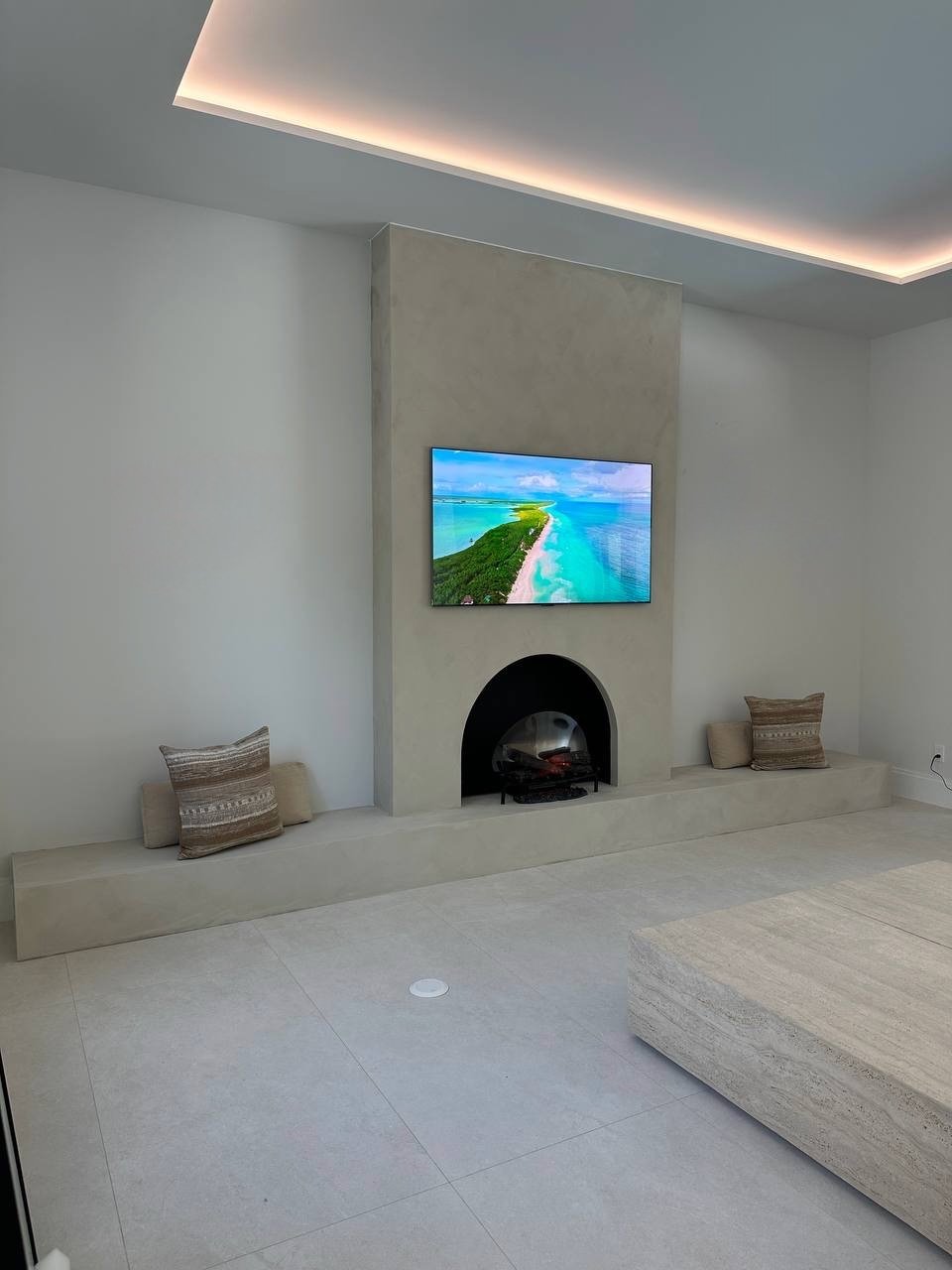
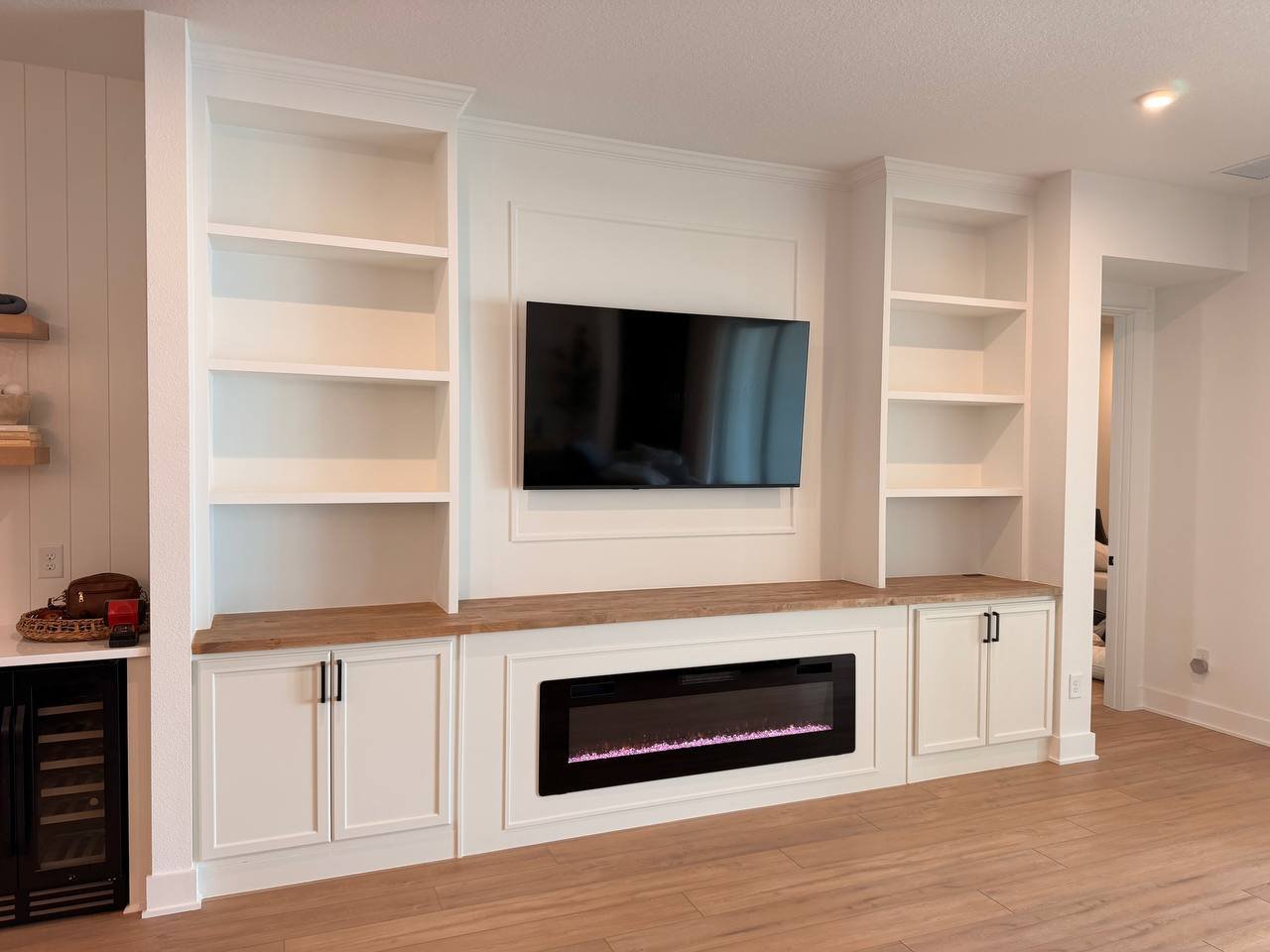
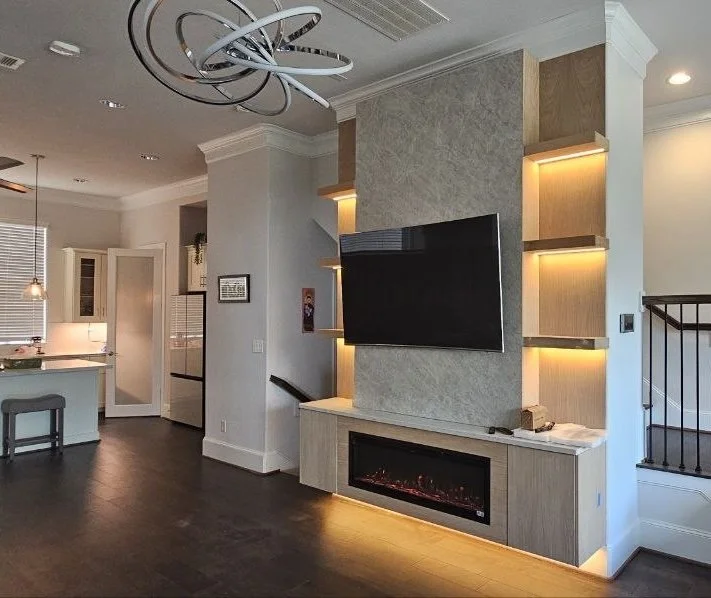
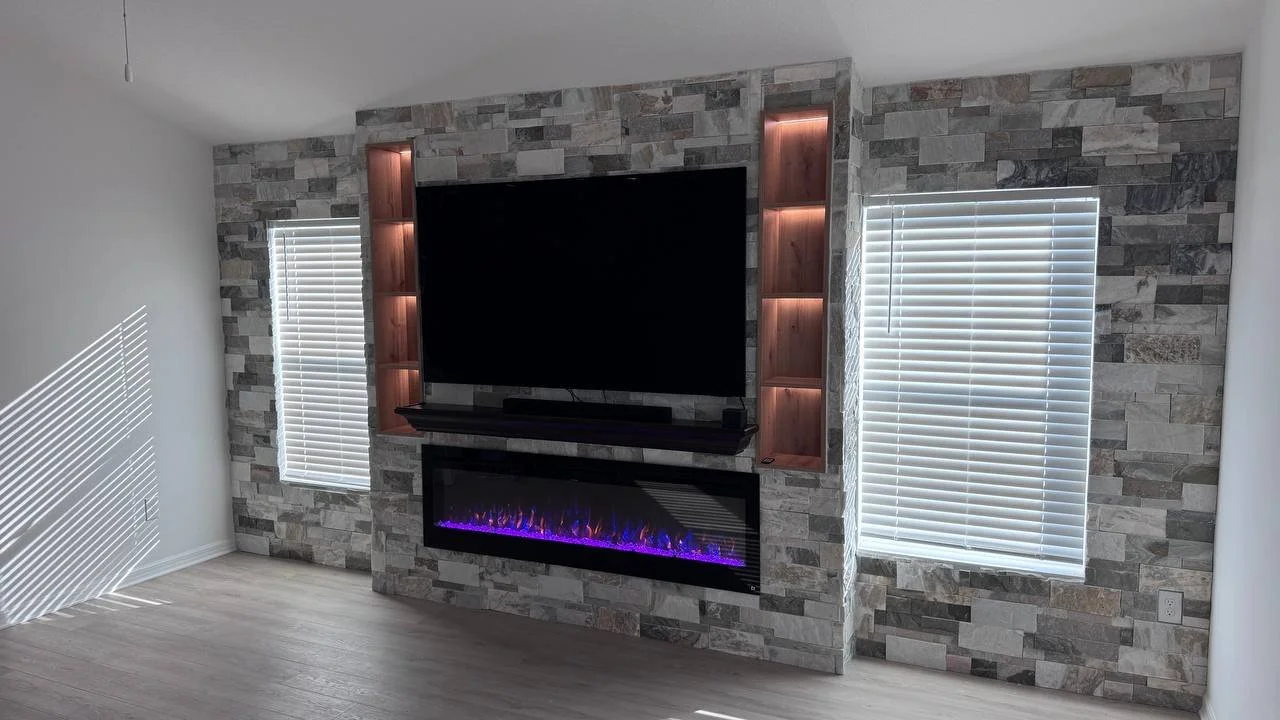
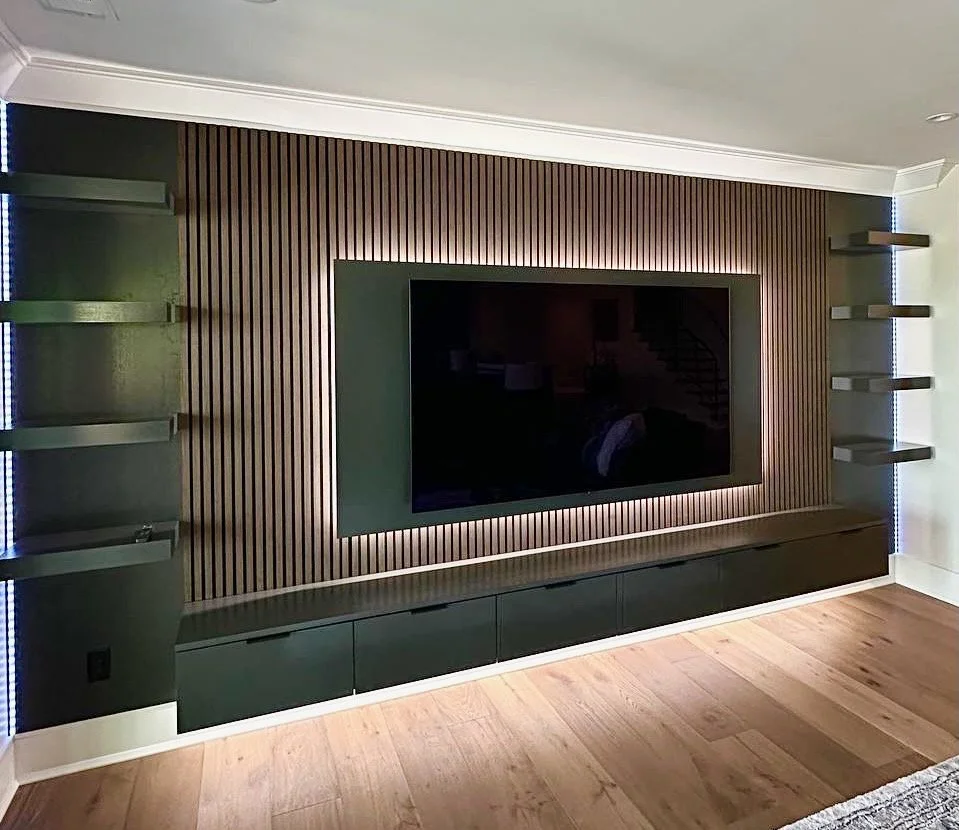
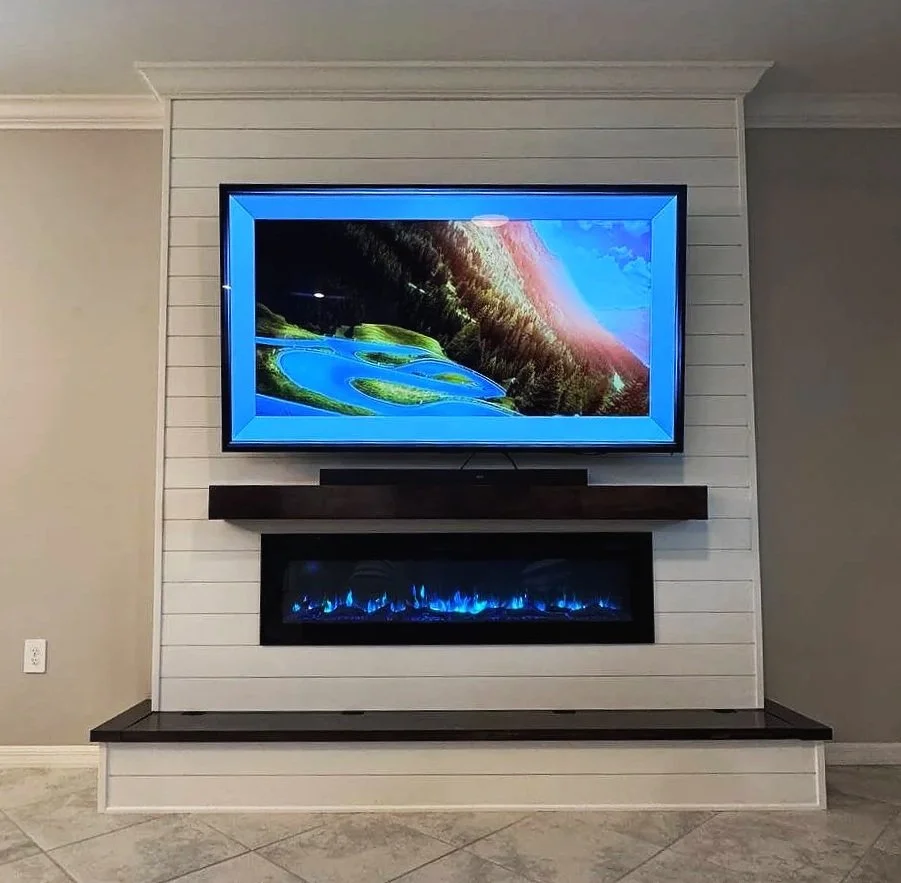
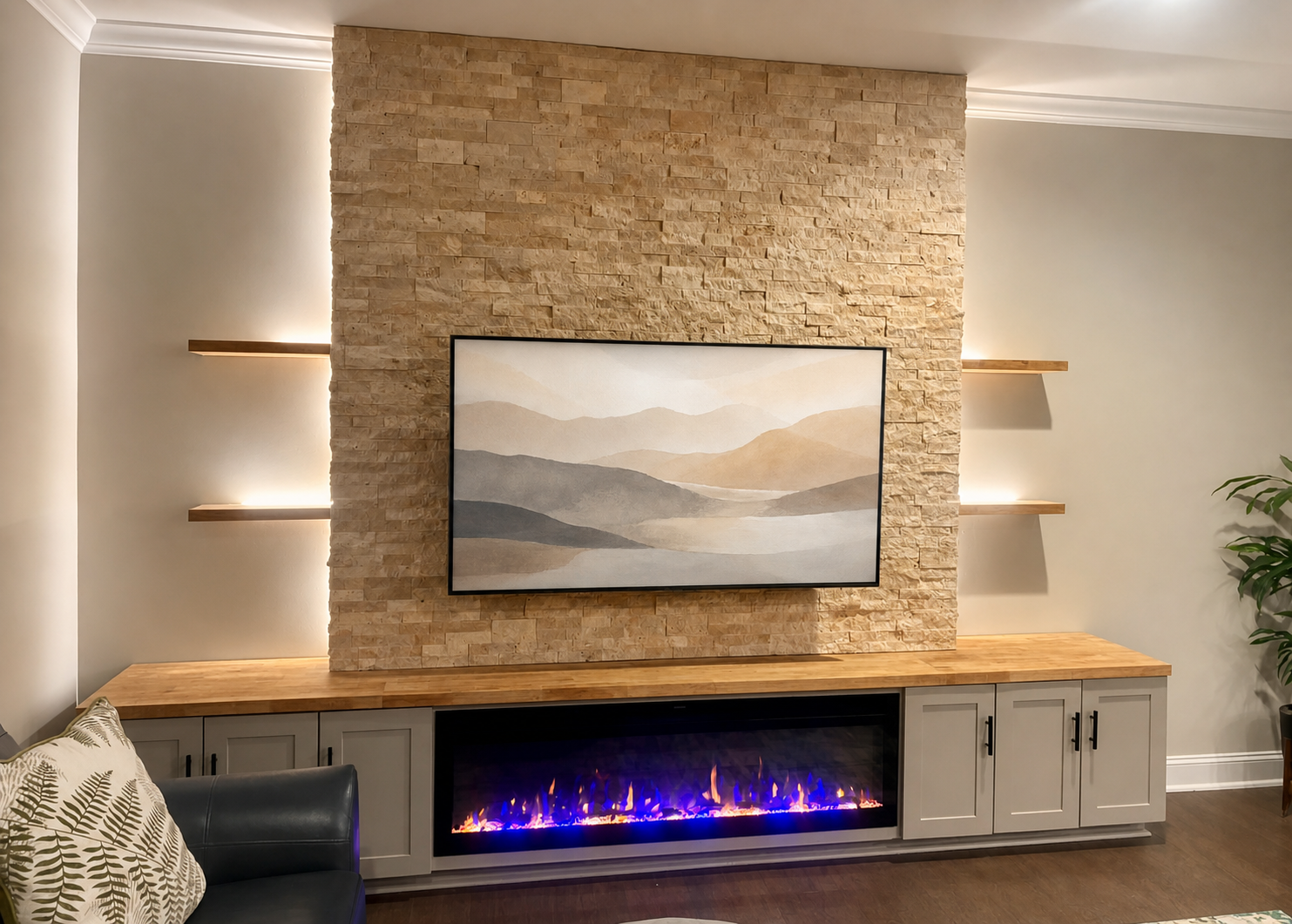
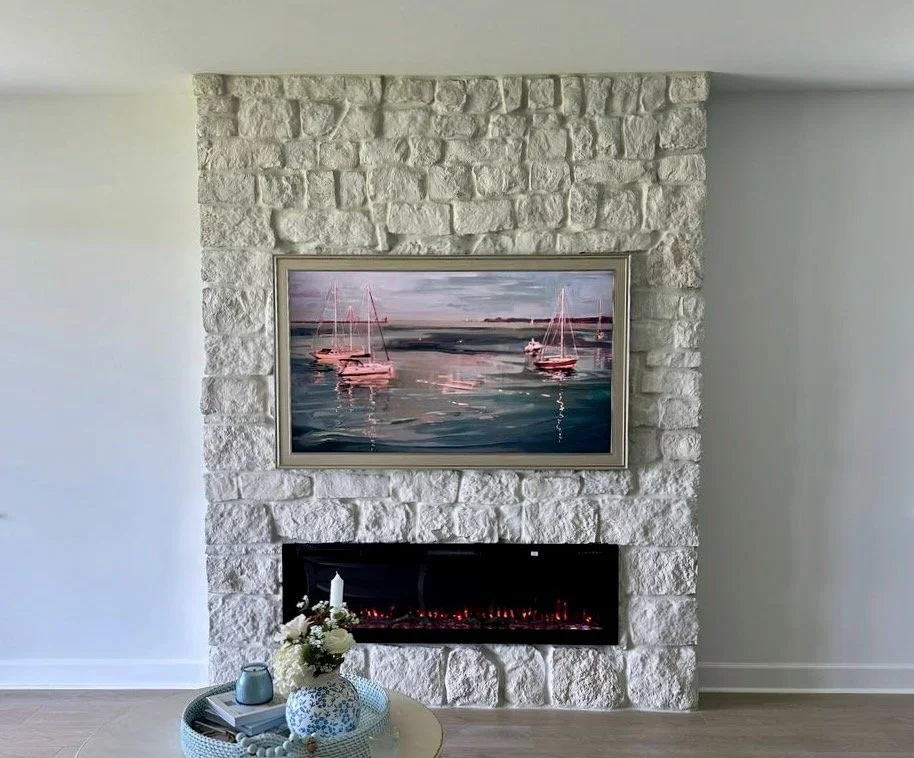
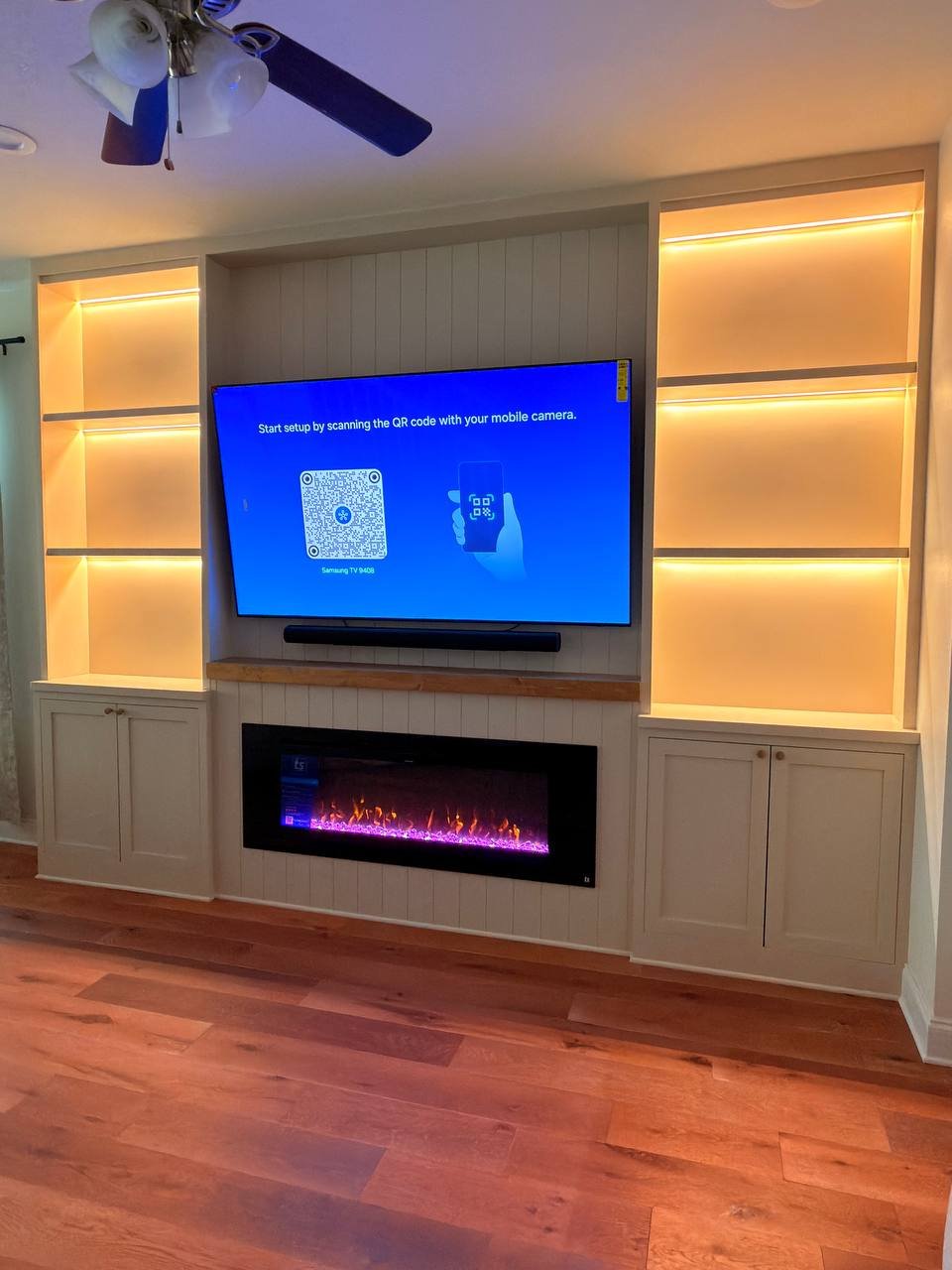
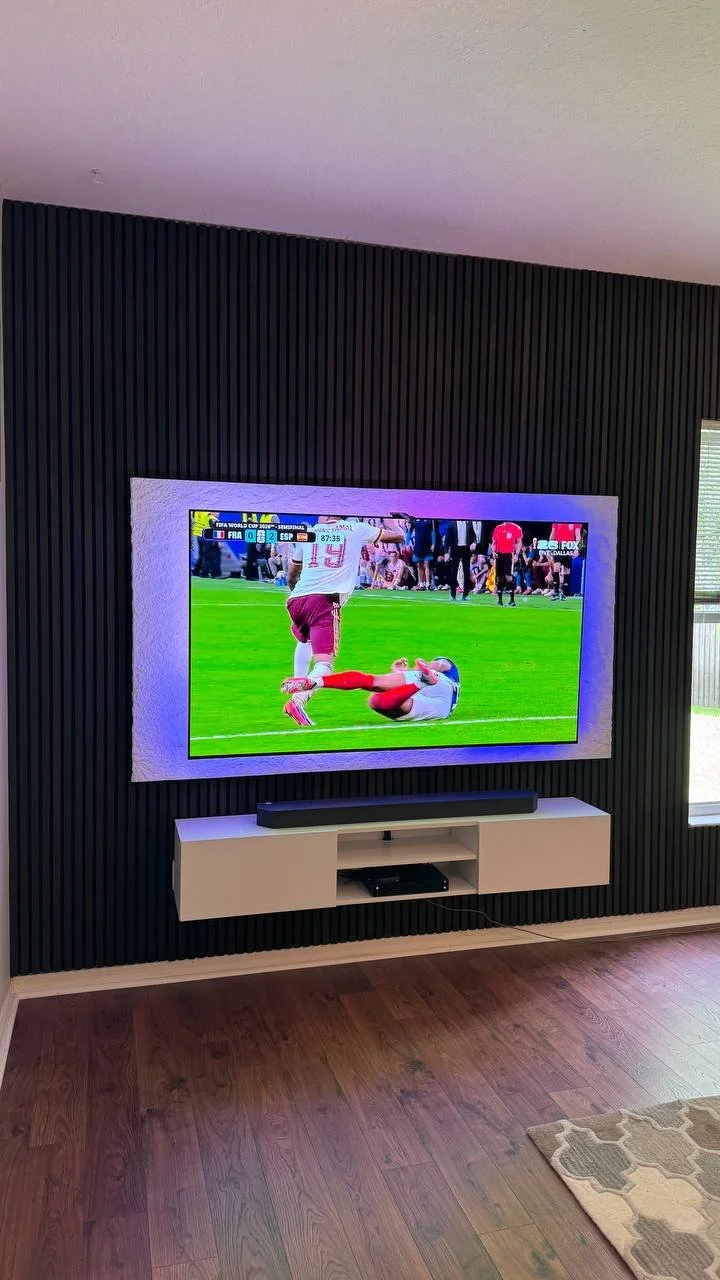
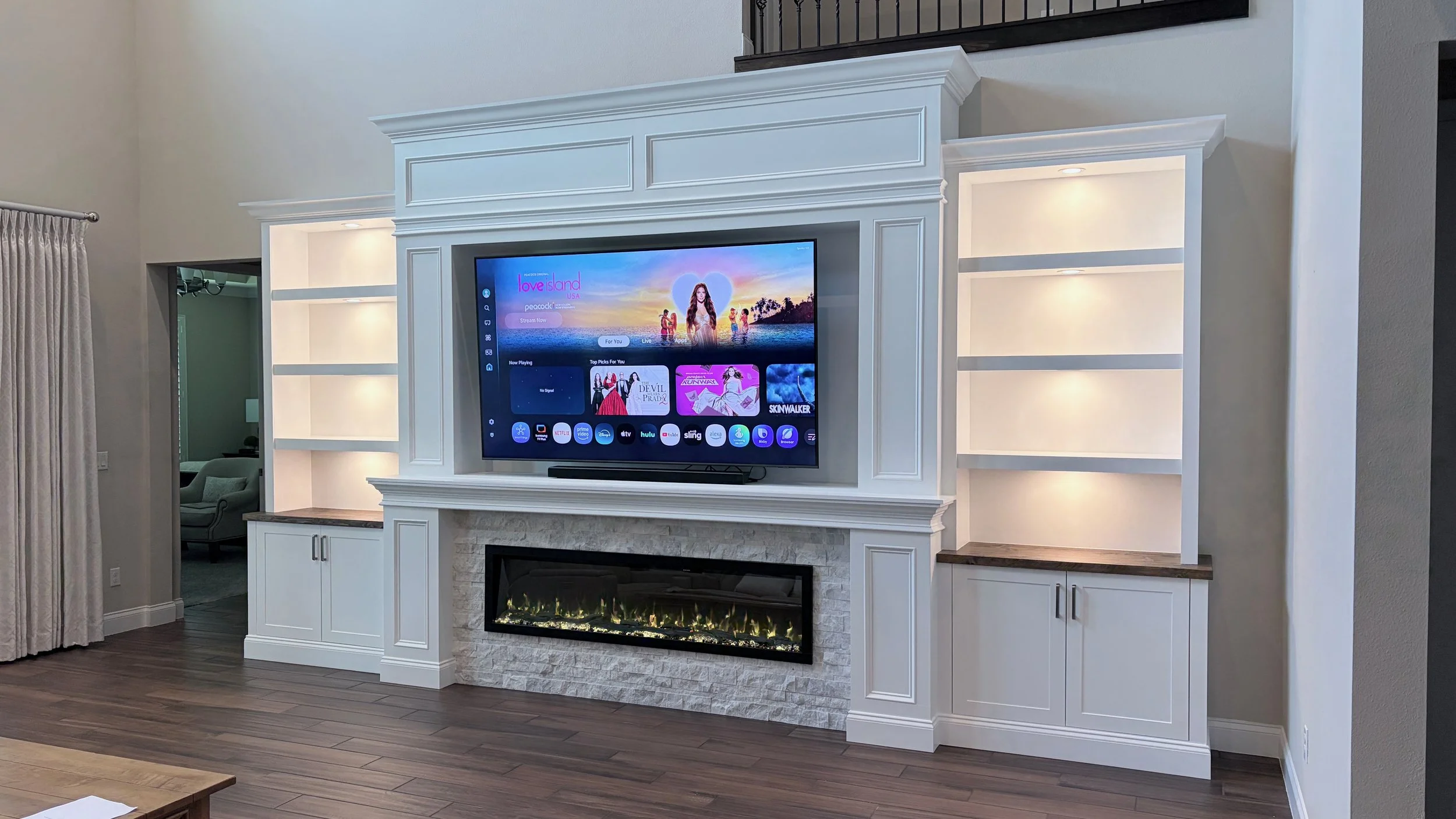
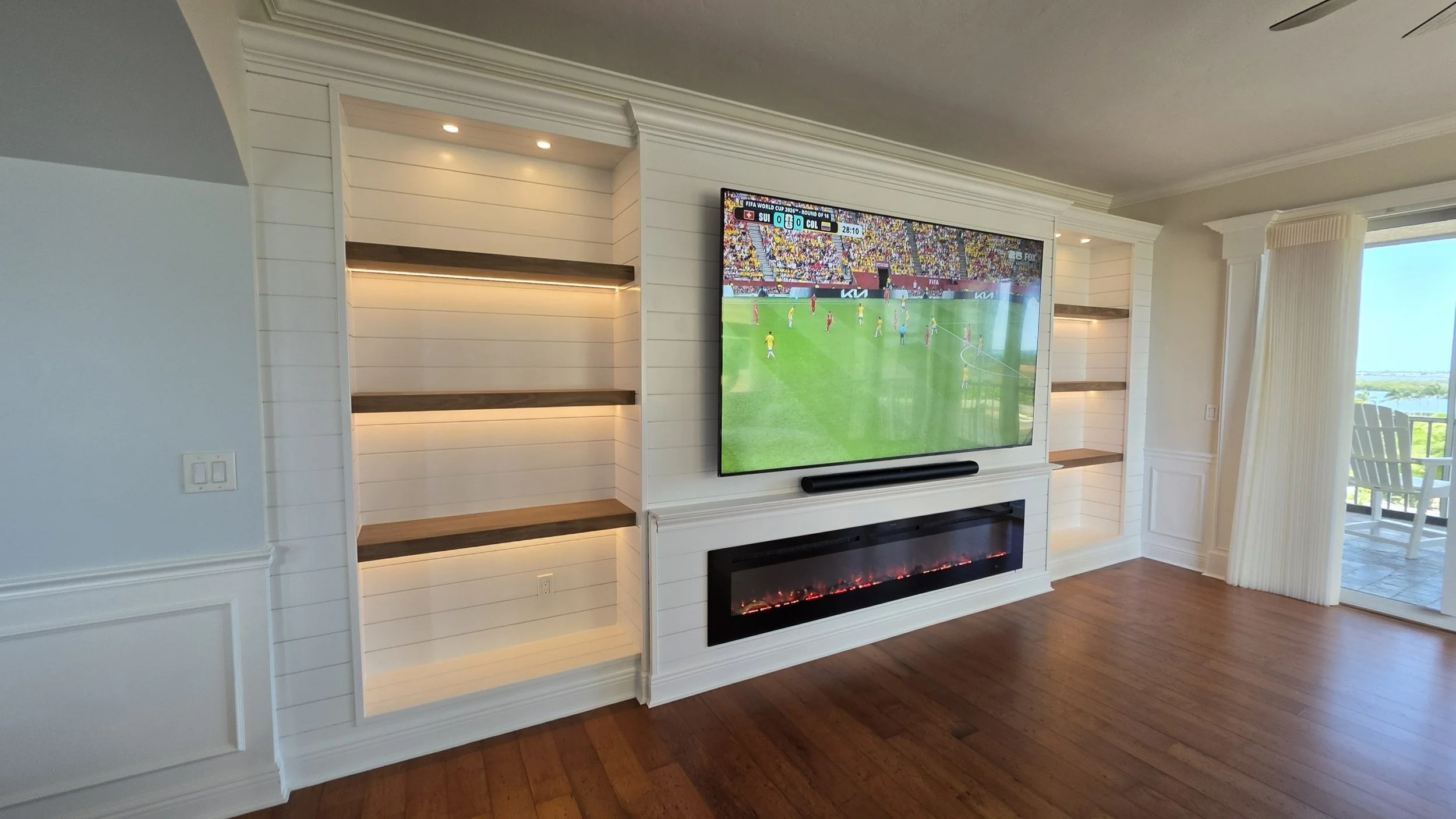
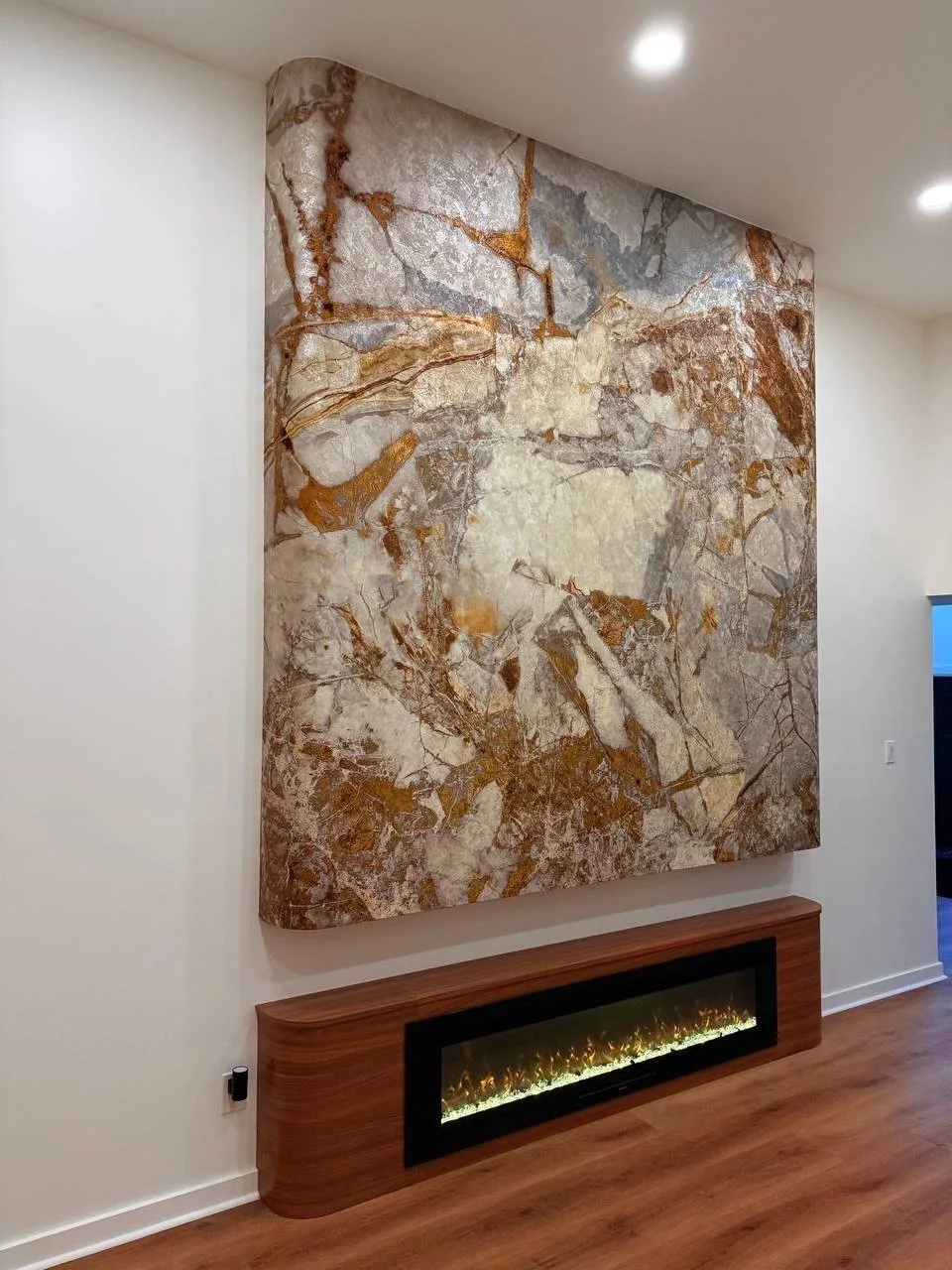
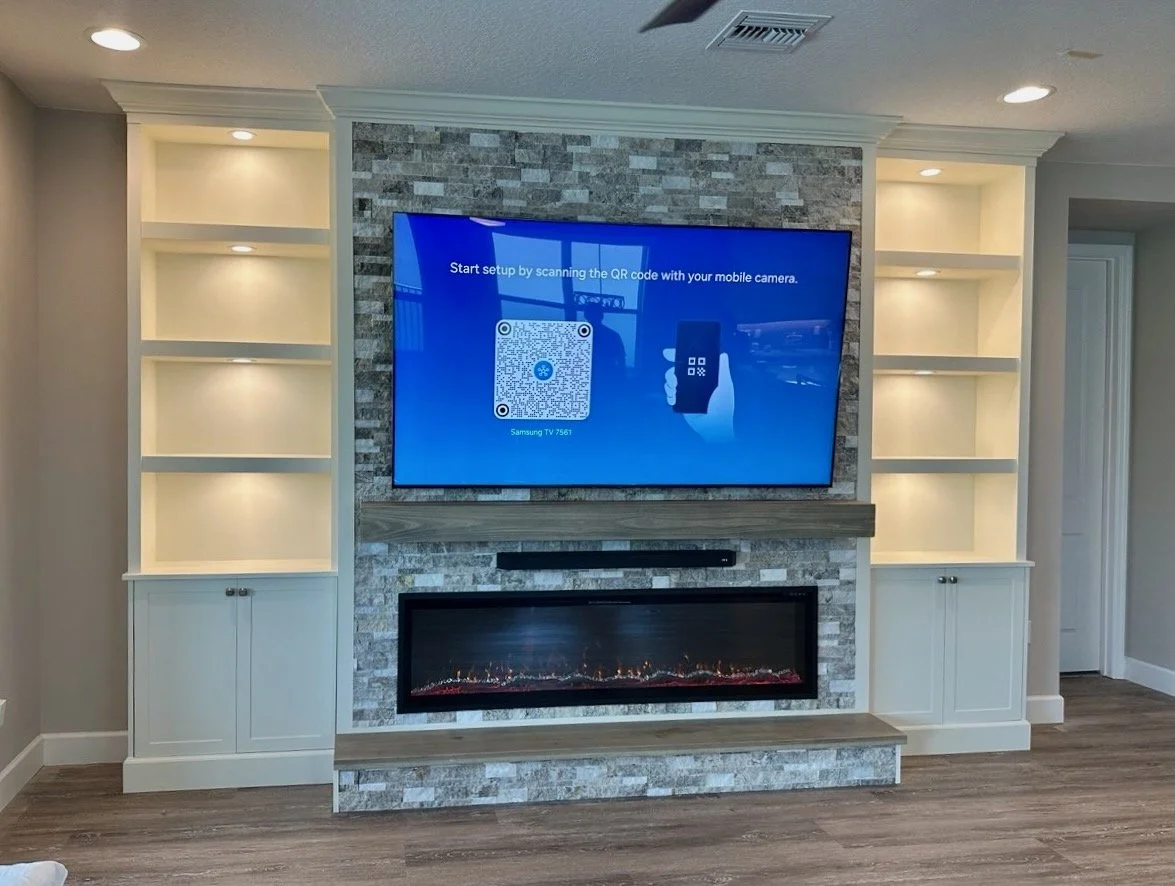
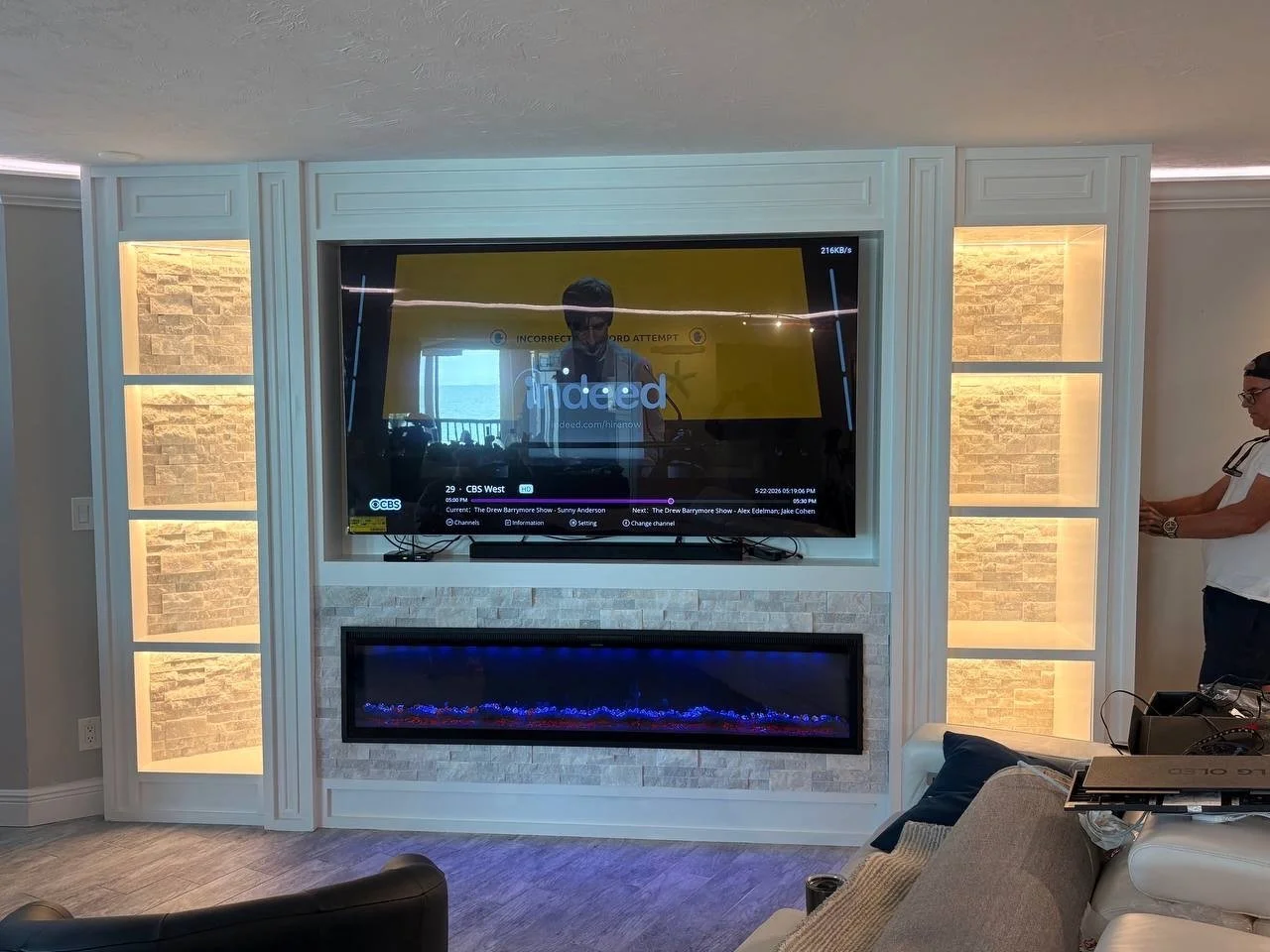
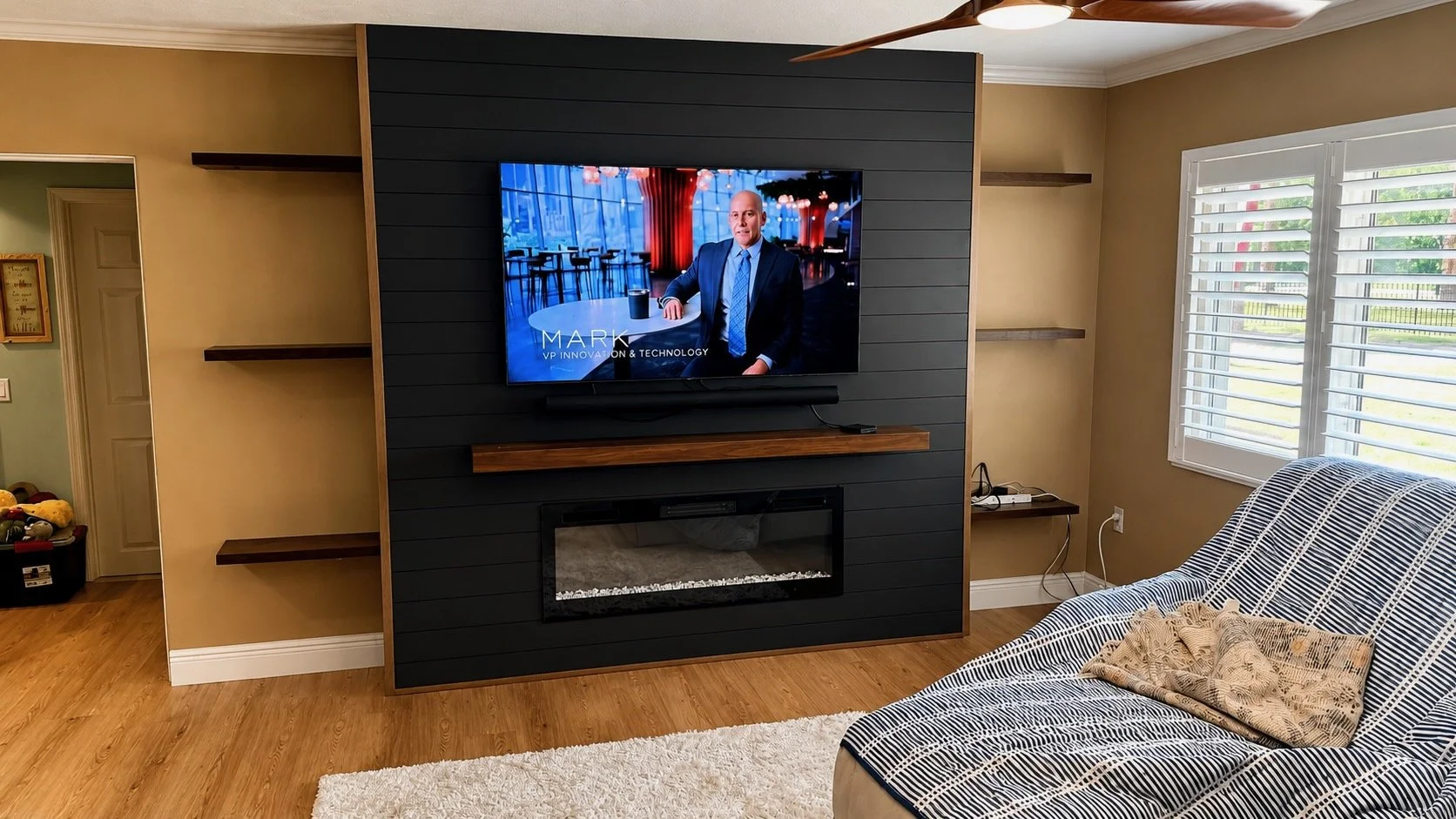
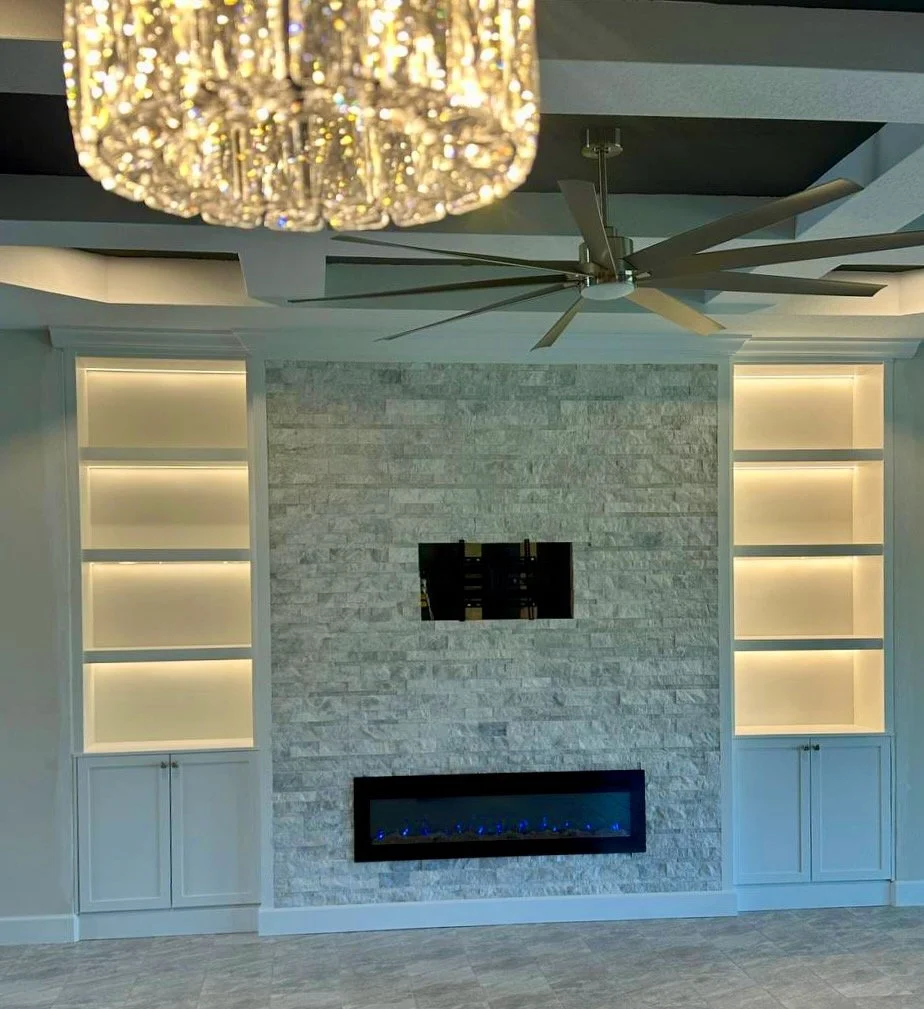
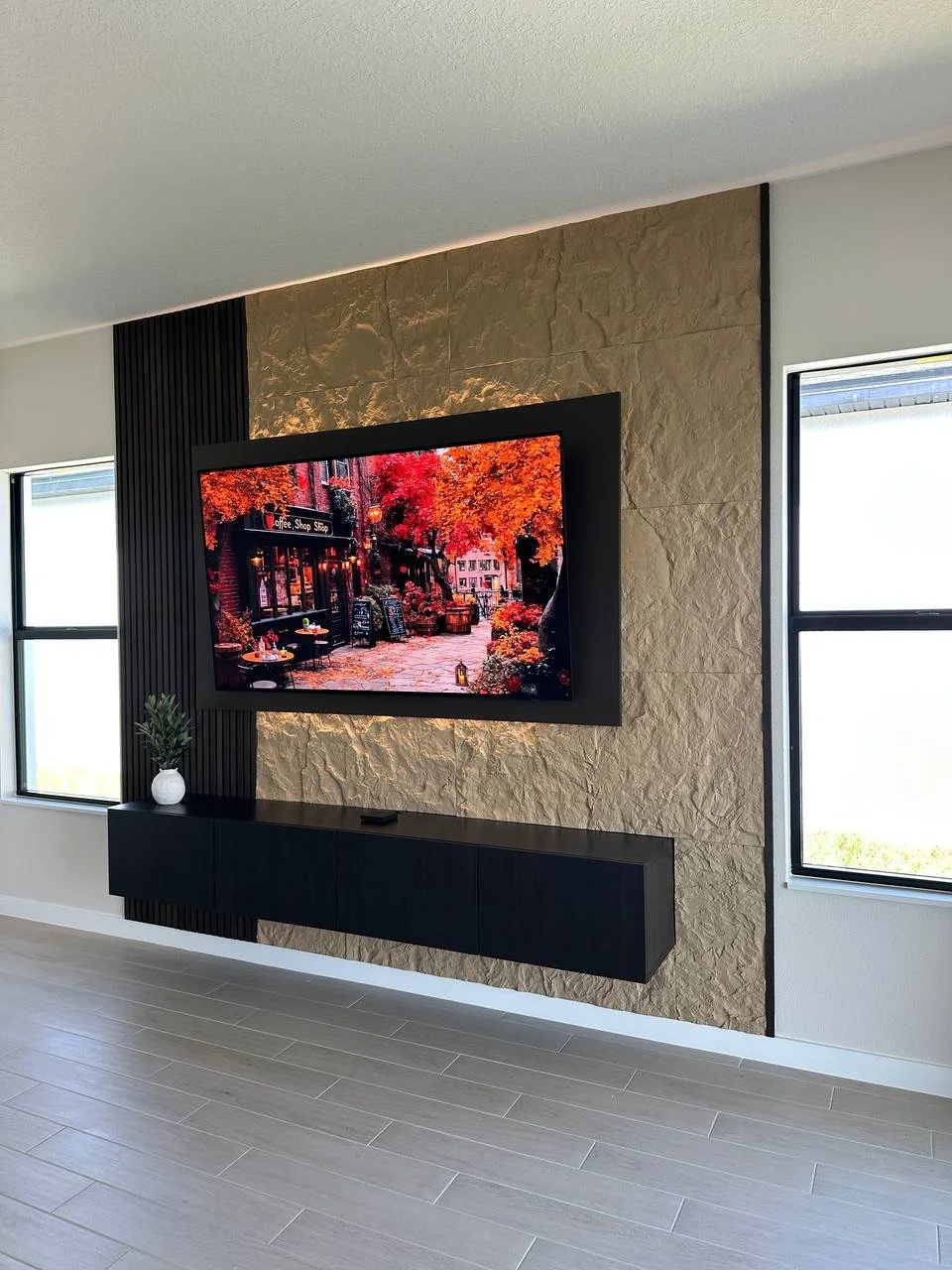
Why Media Wall Models Simplify TV Size Decisions
Pre-designed media wall models define TV size ranges.
Models lock in:
• Acceptable TV widths
• Correct mounting heights
• Cabinet proportions
• Fireplace scale
This removes guesswork.
Explore Florida media wall models by TV size compatibility:
https://tvmediawall.com/models
How to Choose the Right TV Size for Your Media Wall
Answer these questions first:
• Wall width
• Ceiling height
• Viewing distance
• Fireplace requirement
Then select a model that supports that TV size naturally.